
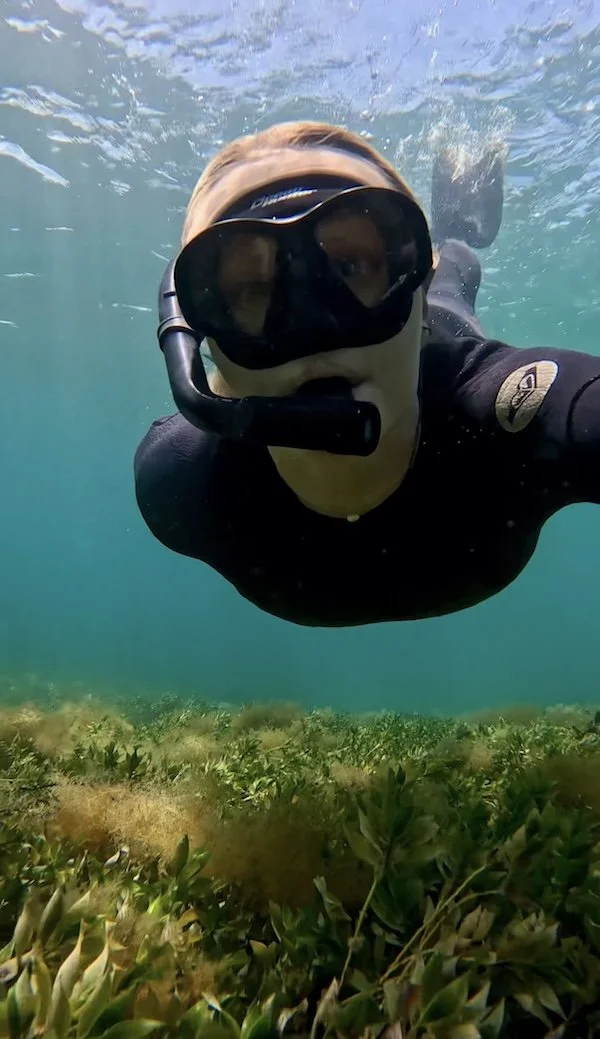
As a capital city, Melbourne is so lucky to be situated along Port Phillip Bay. Port Phillip Bay is an incredibly diverse marine ecosystem full of many different types of reefs, seagrasses, fish and marine mammals.
A note on nature…
When you enter the water, you are moving through a functioning ecosystem, a whole new world.
Every surface, from seagrass to reef, supports living communities that can be easily damaged by human contact. Avoid touching marine life or the seabed, try to stay afloat rather than step on things, and move slowly to minimise disturbance.
For both environmental protection and your own safety, nothing should be taken from the water, and nothing should be touched. Respecting these systems ensures they remain intact for the marine life that call it home and for future generations to explore.
Where to go snorkelling in Melbourne?
Ricketts Point Marine Sanctuary
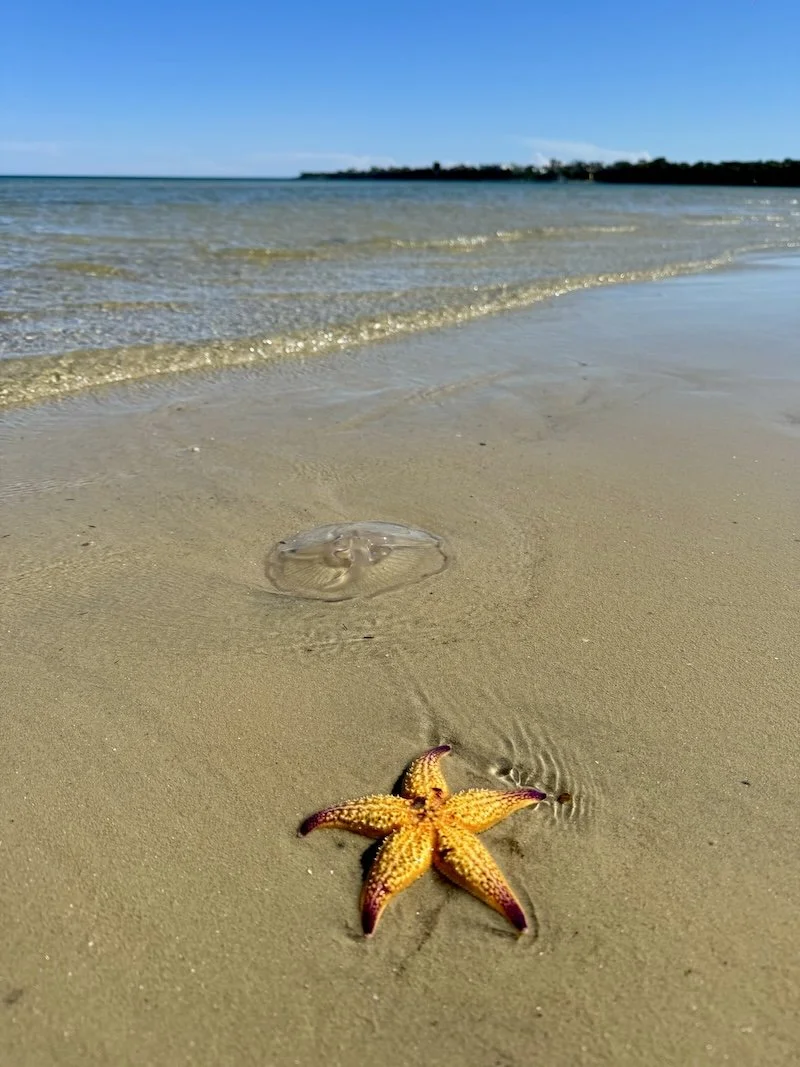
Ricketts Point is one of the most consistent snorkelling spots close to Melbourne. It is shallow, relatively protected, and easy to access, which makes it a reliable option when conditions elsewhere are rough.
You will be moving across a mix of reef and sand, which is where most of the activity happens. Rays are a regular sight here, often resting on the seabed in between reef sections. Check out this guide to snorkelling in the area here.
Distance from Melbourne: approximately 20 km (30–40 minutes)
Highlight: I have seen small rays every time I come here! You can also help out with conservation programs that are regularly run here. Check out the links below for more info on this:
Snapshot Science
Rays can detect electrical signals from animals hidden in the sand, which allows them to feed even when they cannot see their prey.
Jawbone Marine Sanctuary
Jawbone is one of the closest snorkelling locations to the city, but it feels more exposed and less structured than Ricketts Point. The seabed is a mix of basalt rock, sand, and seagrass, so it is worth covering ground and scanning as you go.
Expect small fish, invertebrates, and the occasional ray across the sand.
Highlight: Snorkelling that is accessible via Public Transport is a huge win!
Distance from Melbourne: approximately 15 km (20–30 minutes)
Snapshot Science
Seagrass beds are an important habitat for small and juvenile fish. They provide shelter and feeding areas within otherwise open environments.
Where to go snorkelling near Melbourne?
Chinaman’s Hat
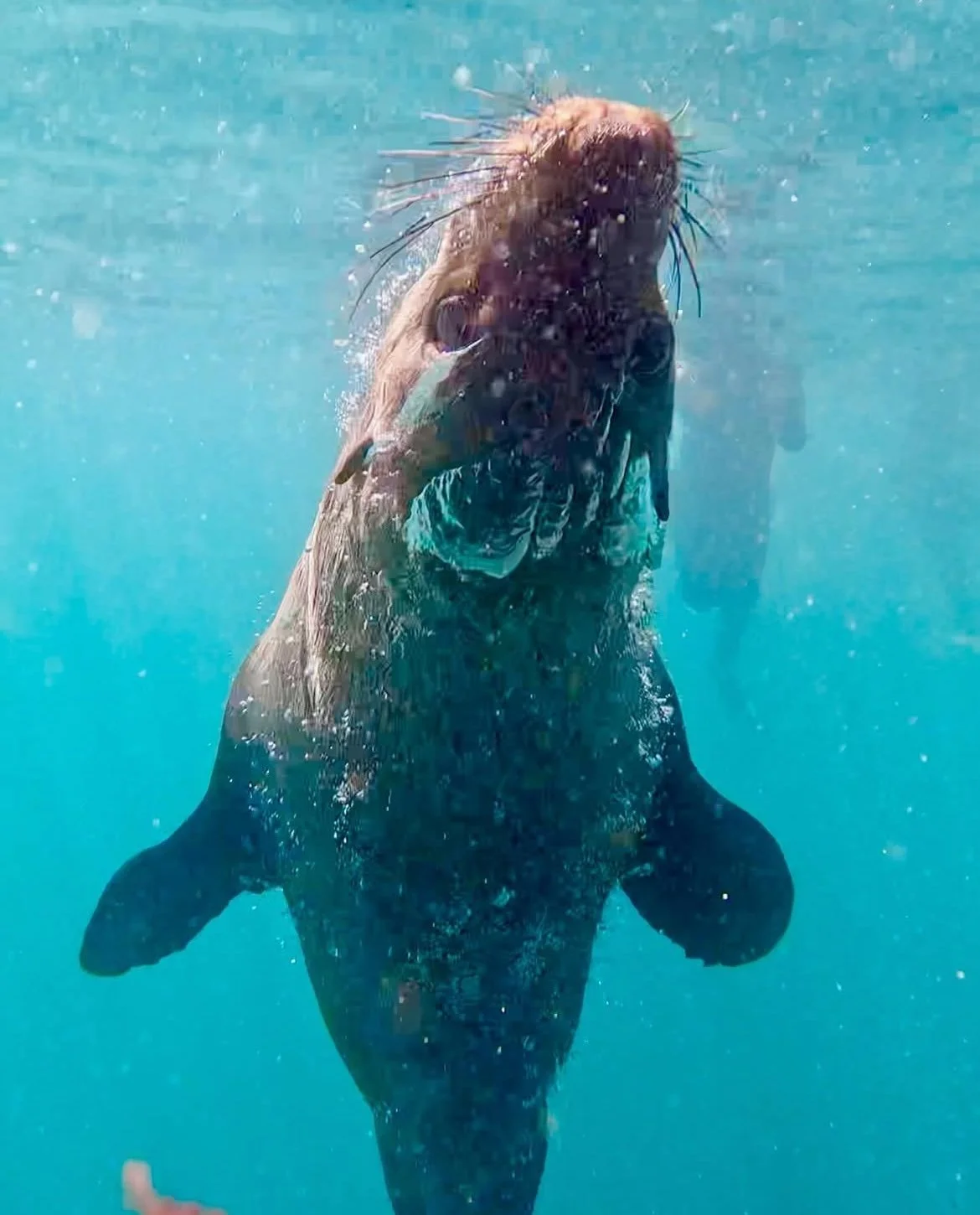
Chinaman’s Hat is one of the few places near Melbourne where you can reliably see Australian fur seal in the water. It is an offshore structure, so access is by boat.
Seals use it as a resting site and are often in the area.
Highlight: Seals really are the puppies of the sea! They are so much fun to swim with.
Distance from Melbourne: approximately 60 km (access via boat)
Snapshot Science
Australian fur seals are top predators in the bay and feed mainly on fish and squid.
Portsea Pier
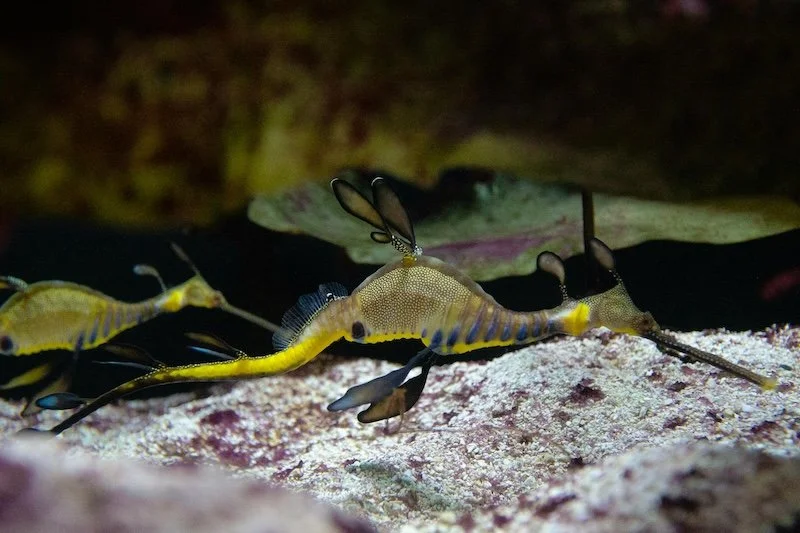
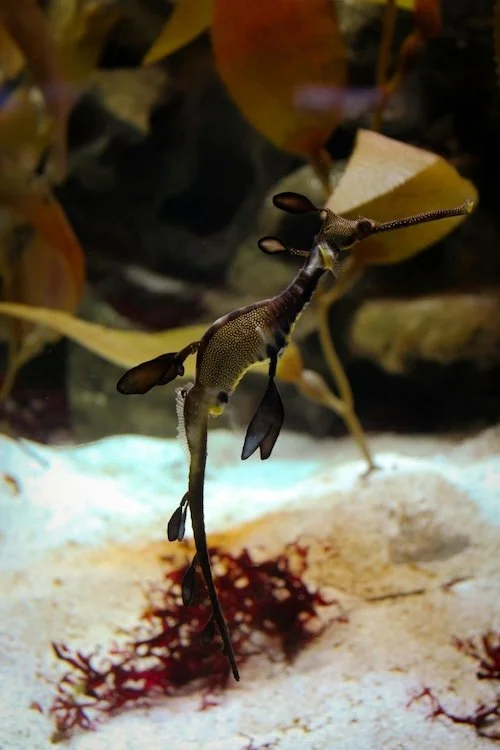
Portsea Pier is one of the better-known snorkelling sites in Victoria for one reason: weedy seadragon.
The habitat here is mostly seagrass and sand. Finding a seadragon comes down to slowing down and searching carefully.
Highlight: There are lots of colourful weeds and the water is shallower here, which can make it easier to spot the elusive weedy sea dragon.
Distance from Melbourne: approximately 110 km (1.5–2 hours)
Snapshot Science
Male weedy seadragons carry eggs on the underside of their tail until they hatch.
Flinders Pier
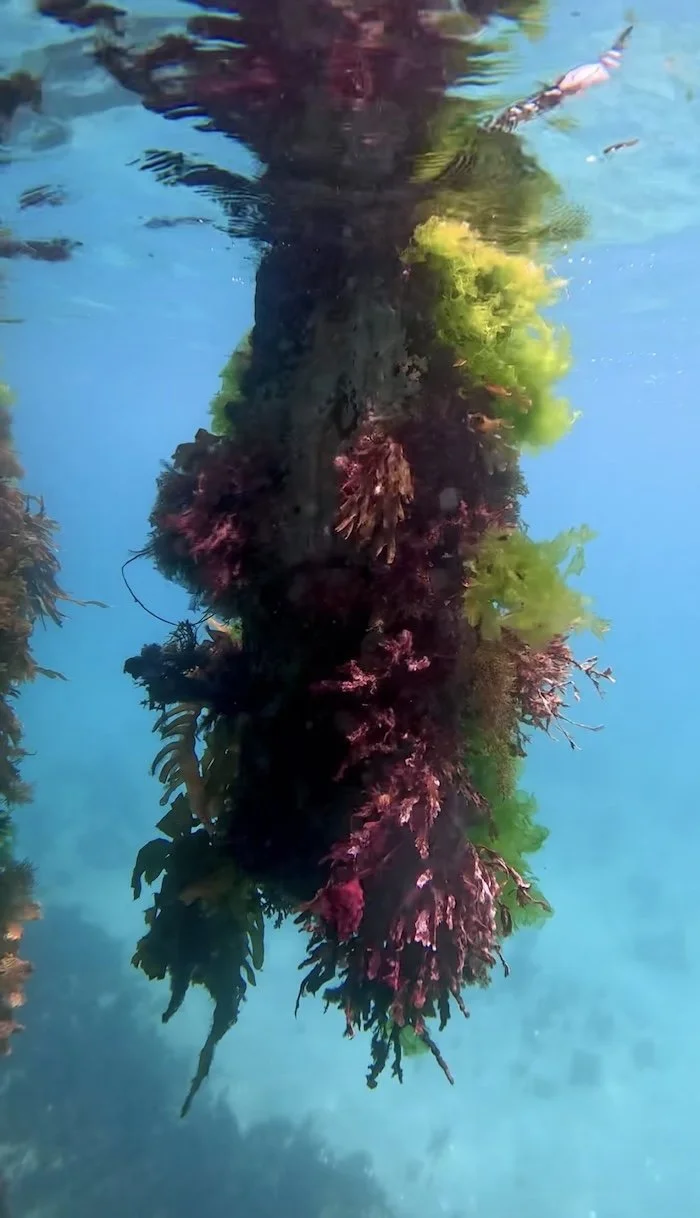
Flinders Pier extends into deeper water and supports a wide range of marine life along its pylons.
It is a good location to spend time moving along the structure and checking different depths.
Highlight: Huge rays and weedy sea dragons.
Distance from Melbourne: approximately 100 km (1.5–2 hours)
Snapshot Science
Piers act as artificial reefs, providing surfaces for marine life to attach to and increasing local biodiversity.
Blairgowrie Pier
Blairgowrie Pier is known for its length and the amount of fish around the pylons. The further out you go, the deeper it gets, and the more activity you tend to see.
It is a site where awareness of distance and conditions matters.
Snorkelling safety list
Snorkelling here is highly condition-dependent. Visibility, swell, and wind all influence what you will see and how safe it is to enter the water.
*Please note this is not an exhaustive list
Check local weather, wind, and swell forecasts before entering the water
Snorkel with a buddy
Be aware of currents and exposed sites
Enter and exit carefully to avoid slips on rock platforms or reefs
Maintain an appropriate distance from wildlife
Monitor your body temperature and exit the water if you become cold
Stay within your skill level and comfort zone
Follow all regulations within marine protected areas
If you are looking to learn to snorkel there are lots of programs in Melbourne to help you out! Why not sign up for one and meet some fellow snorkellers?
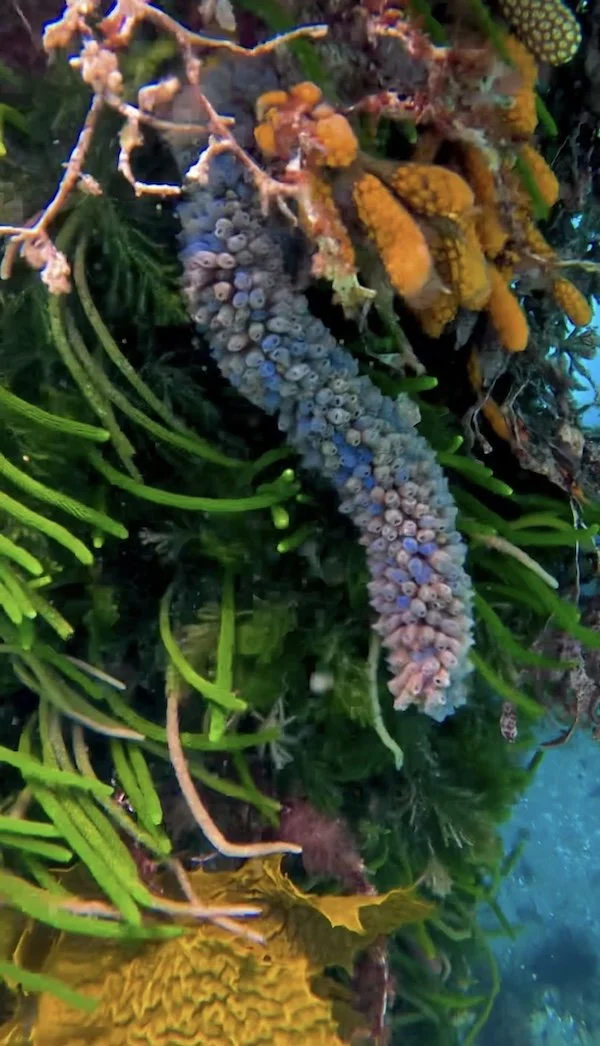
Highlight: Colourful sponge gardens, soft corals, and diverse marine life like nudibranchs and seahorses.
Distance from Melbourne: approximately 100 km (1.5–2 hours)
Snapshot Science
Seagrass stabilises sediment and provides habitat for fish and invertebrates, supporting the wider marine ecosystem.
Snorkelling packing list
*Please note this is not an exhaustive list
Wetsuit suited to local temperatures (commonly 10–18°C across the year)
Mask, snorkel, and fins
Protective footwear for rocky or uneven entry points
Towel and thermal layers for after snorkelling
Sun protection (including reef-safe sunscreen where possible)
Drinking water
Dry bag for personal items
Surface marker buoy (where appropriate)
This is not an exhaustive blog and is only intended to help start you on your journey! For more info, you can also read these great resources:
More snorkelling locations around Victoria:
https://www.parks.vic.gov.au/things-to-do/scuba-diving/top-7-places-to-go-snorkelling-in-victoria
More safety tips for snorkelling:
https://vfa.vic.gov.au/education/be-smart-when-snorkelling
https://www.royallifesaving.com.au/stay-safe-active/activities/diving-and-snorkelling
Hope you enjoy exploring our beautiful world, friends!